


Ushabti / shawabti
Medium: madera policromada
Medidas: 18 cm. de alto
Peso: 27 gramos
Colección Privada
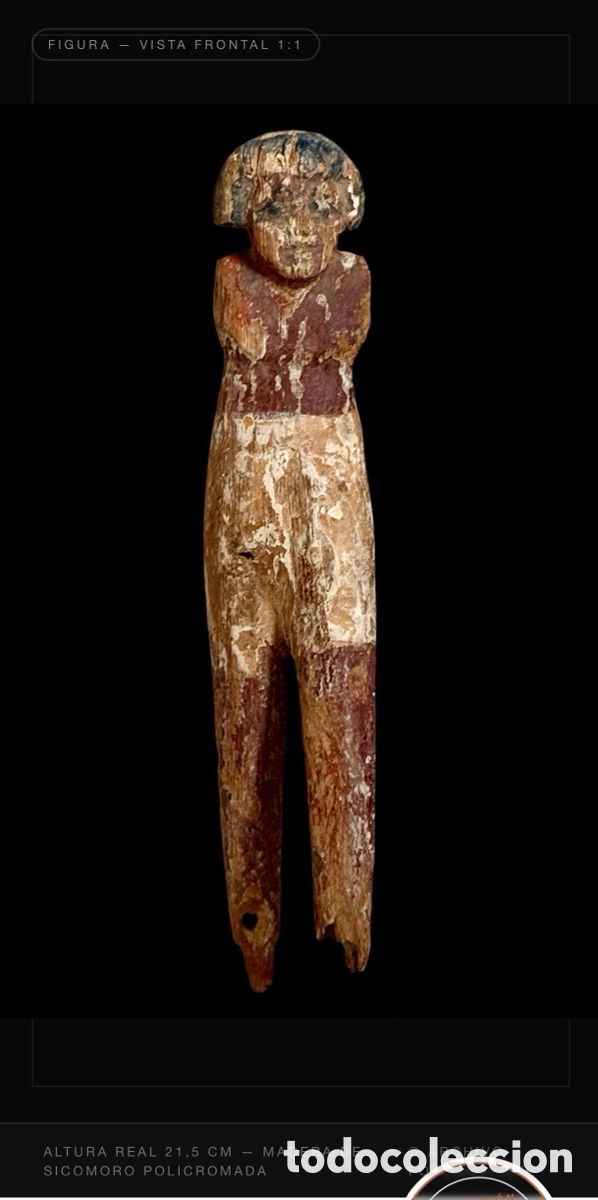
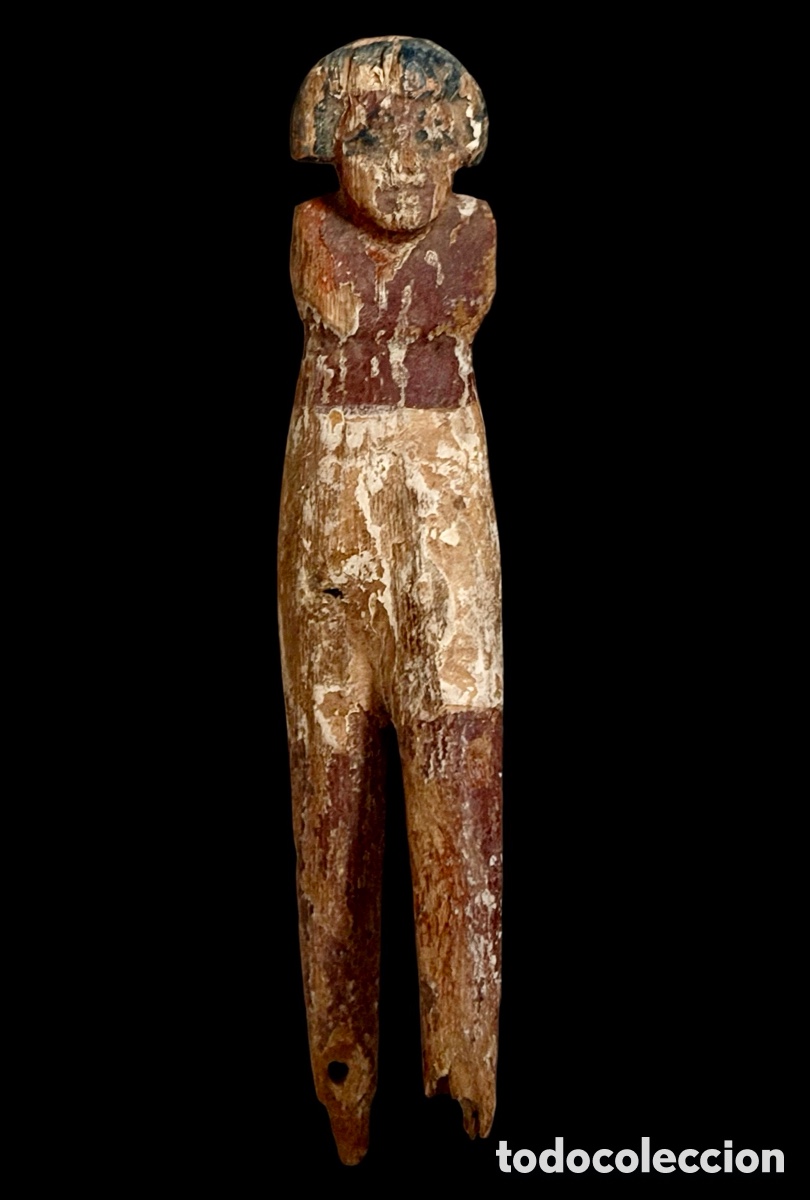
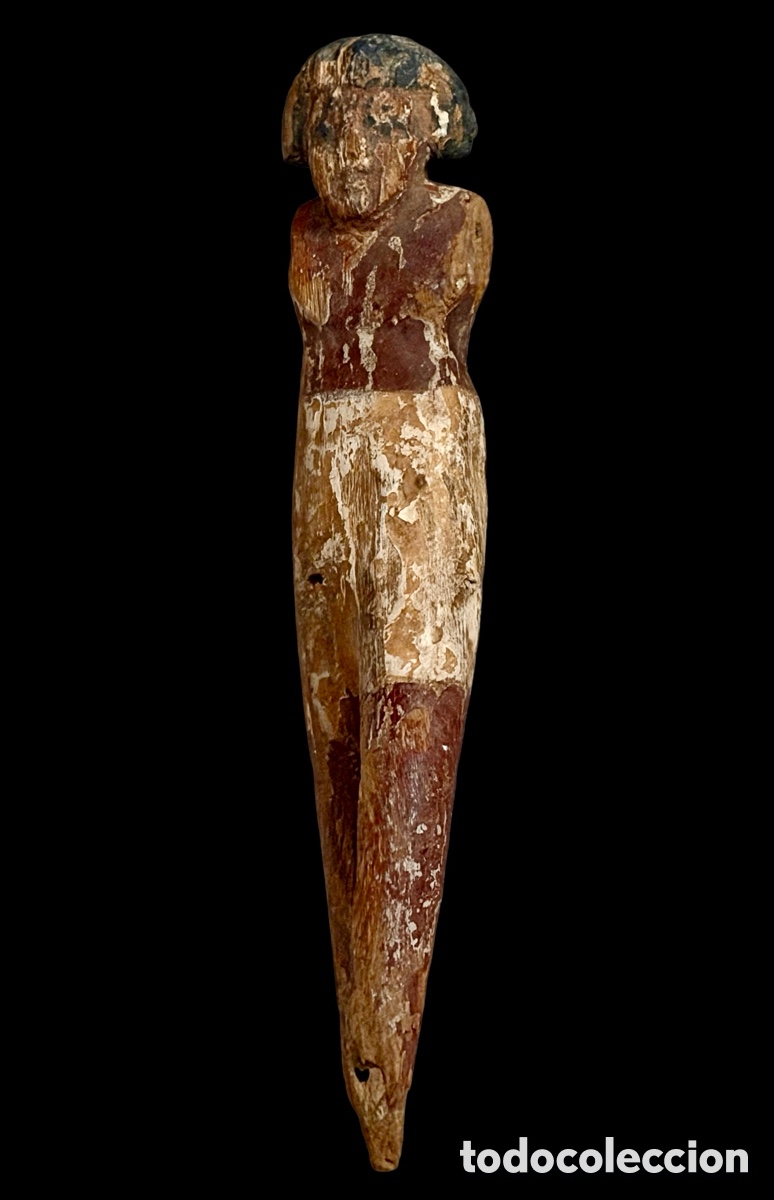
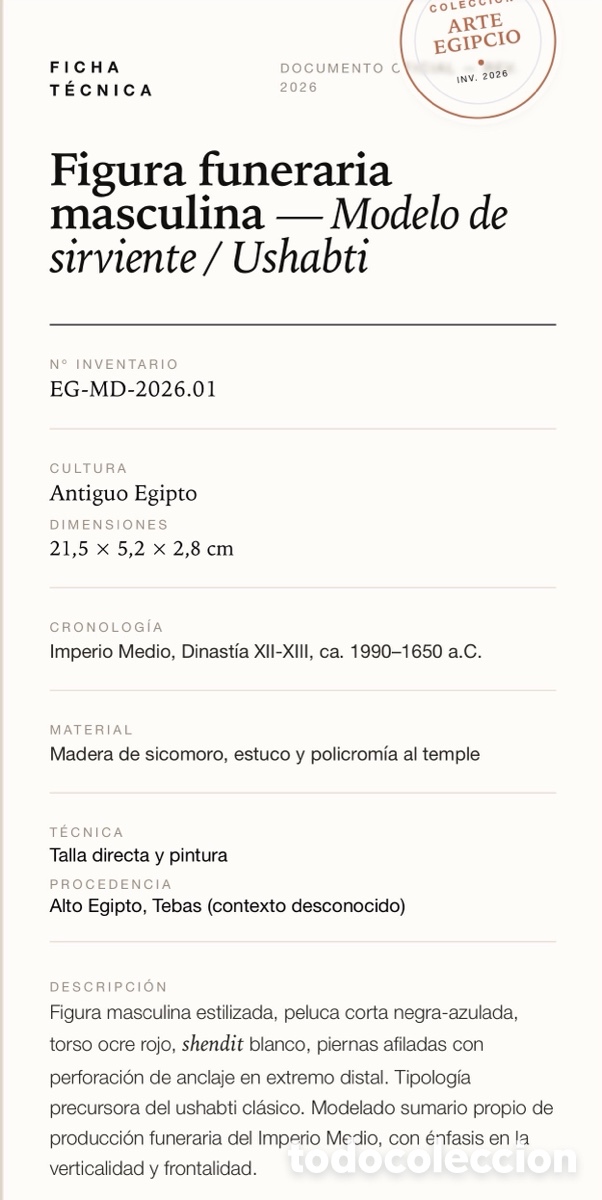
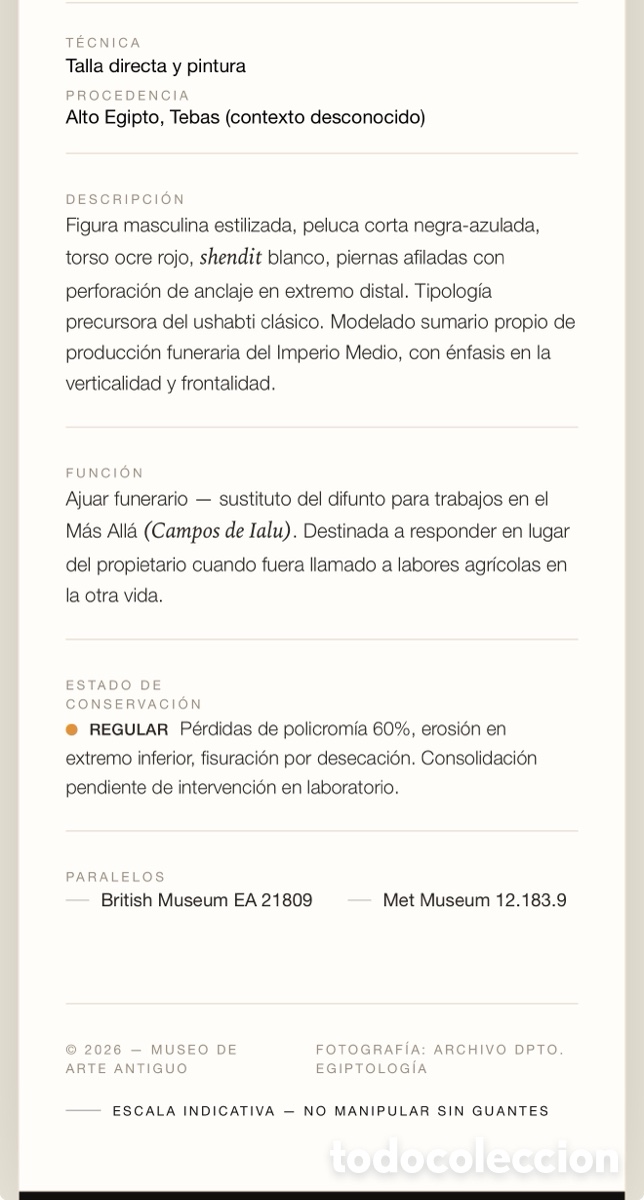
Figura de sirviente modelo del tipo que se ponía en las tumbas egipcias durante el Imperio Medio y el Imperio Nuevo, aprox. 2000 - 1000 a.C.
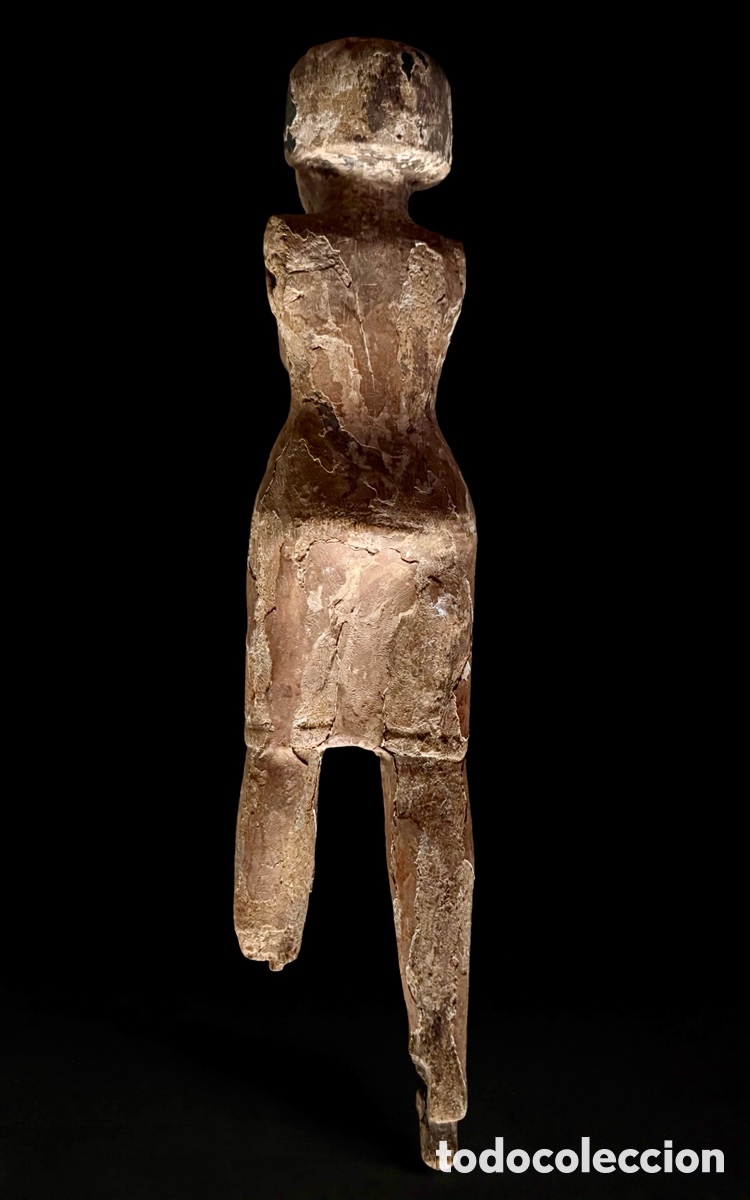
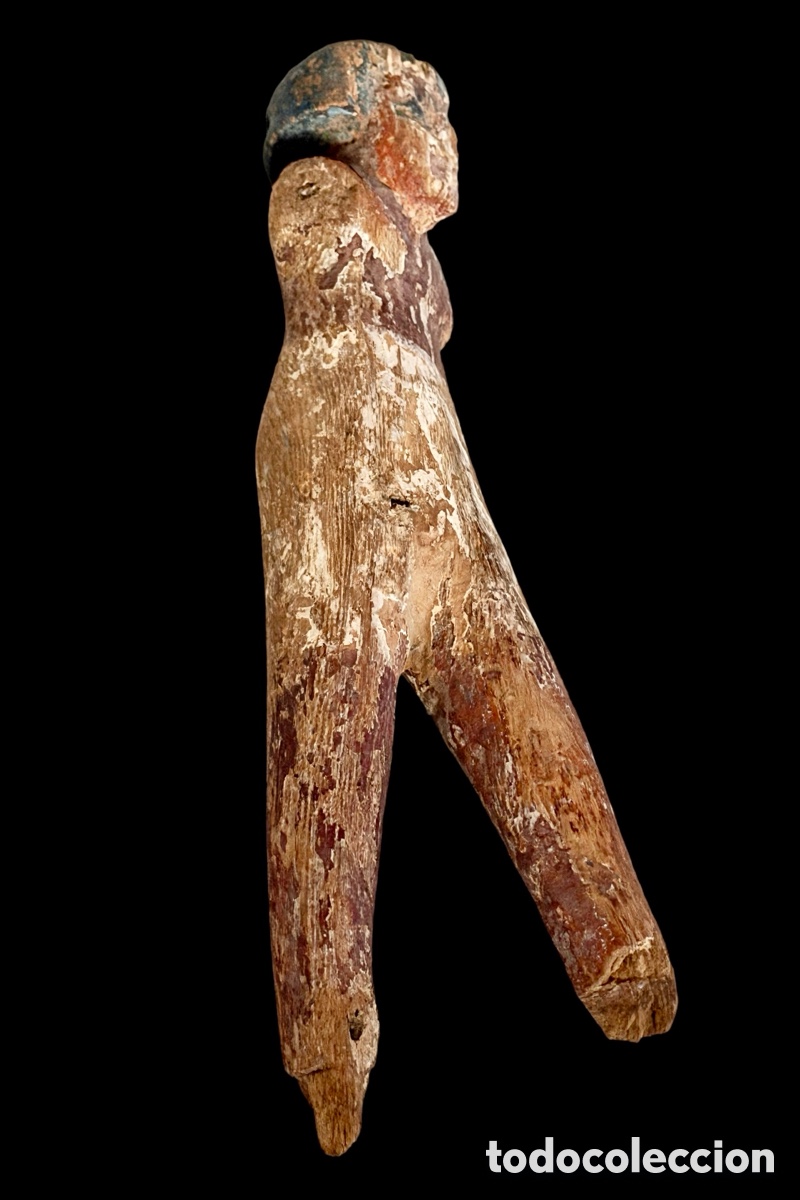
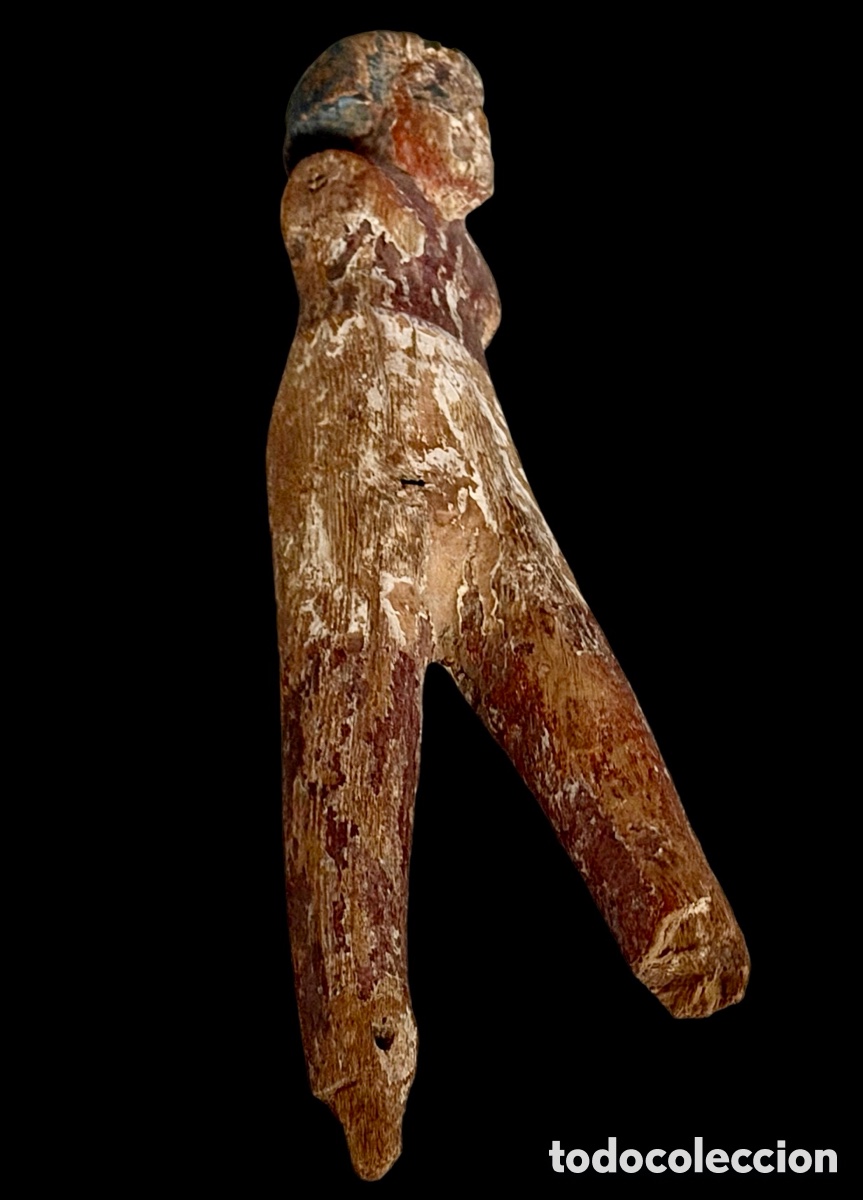
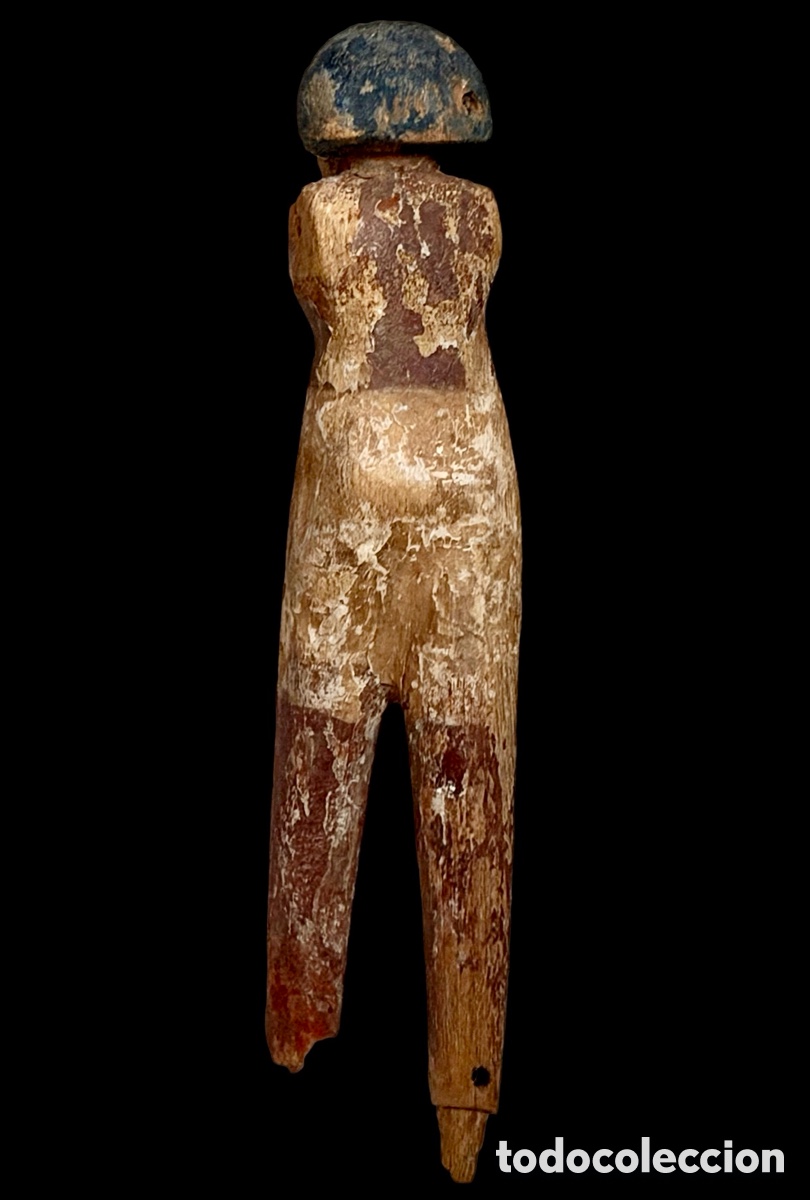
Madera policromada: aún conserva restos de pintura roja en torso y piernas, blanca en la falda/shendit y negra-azulada en la peluca. Típico de estas figuras forma alargada y estilizada, cuerpo sin brazos separados, piernas unidas que terminan en punta. El agujero que se ve en la punta de los pies era para fijarla a una base o a una maqueta funeraria.
Función: no era un juguete. Era un sustituto del difunto en el más allá. Se enterraba con el muerto para que trabajara por él en los campos de Osiris. Las versiones más simples como esta eran las del pueblo, las de élite eran de fayenza con jeroglíficos.
El estado de la pintura muy craquelada y la madera erosionada es justo lo que se espera de una pieza de 3000-4000 años que ha estado en una tumba.
Ushabti / Shawabti
Medium: Polychrome wood
Dimensions: 18 cm high
Weight: 27 grams
Private Collection
A model servant figure of the type placed in Egyptian tombs during the Middle and New Kingdoms (approx. 2000–1000 BC).
Polychrome wood: it retains traces of red paint on the torso and legs, white on the kilt (*shendit*), and a blue-black hue on the wig. It exhibits the characteristic elongated, stylized form: a body without separate arms and joined legs tapering to a point. The hole visible at the tips of the feet was intended for attachment to a base or a funerary model.
Function: It was not a toy. It served as a substitute for the deceased in the afterlife, buried with the dead to perform labor on their behalf in the Fields of Osiris. Simpler versions like this one belonged to the common people, whereas elite versions were made of faience and inscribed with hieroglyphs.
The condition—featuring heavily crackled paint and eroded wood—is exactly what one would expect from a 3,000- to 4,000-year-old artifact that spent time in a tomb.

Espagne (Málaga)


 Español
 English
 Deutsch
 Français
 Português
 Italiano