


Ushabti De Madera Policromado
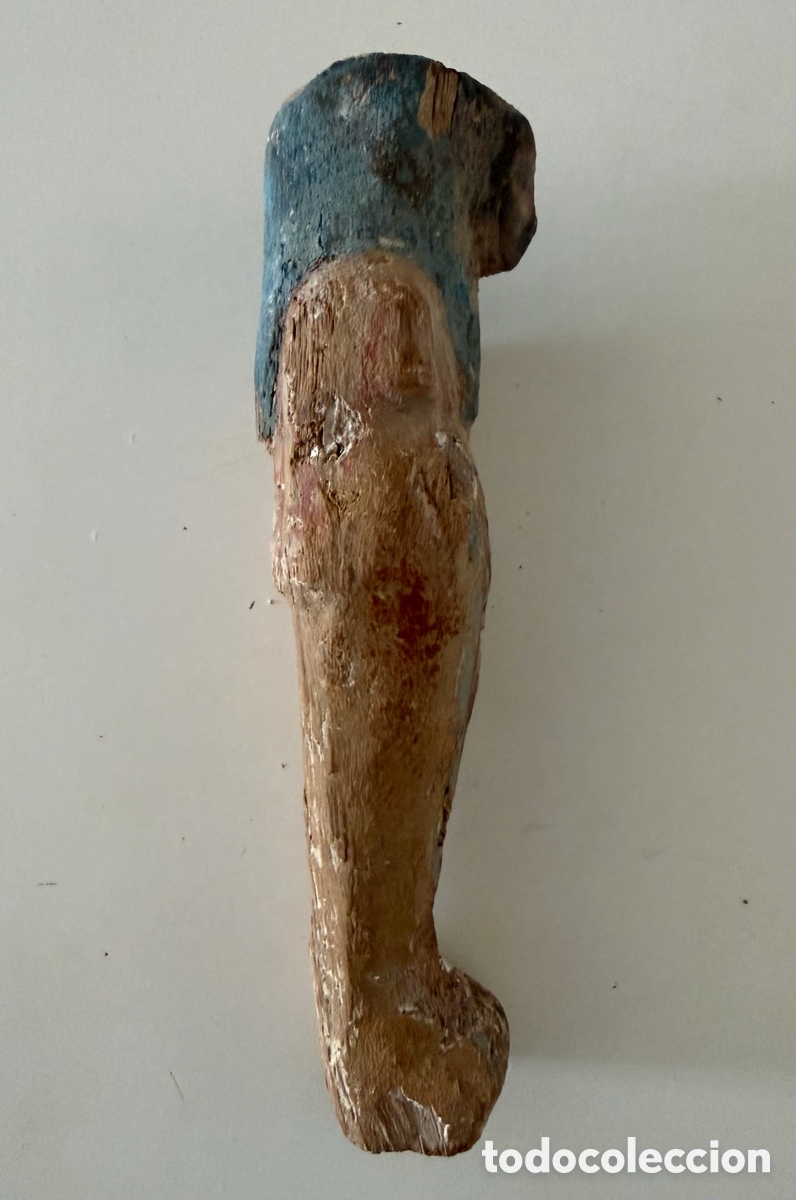
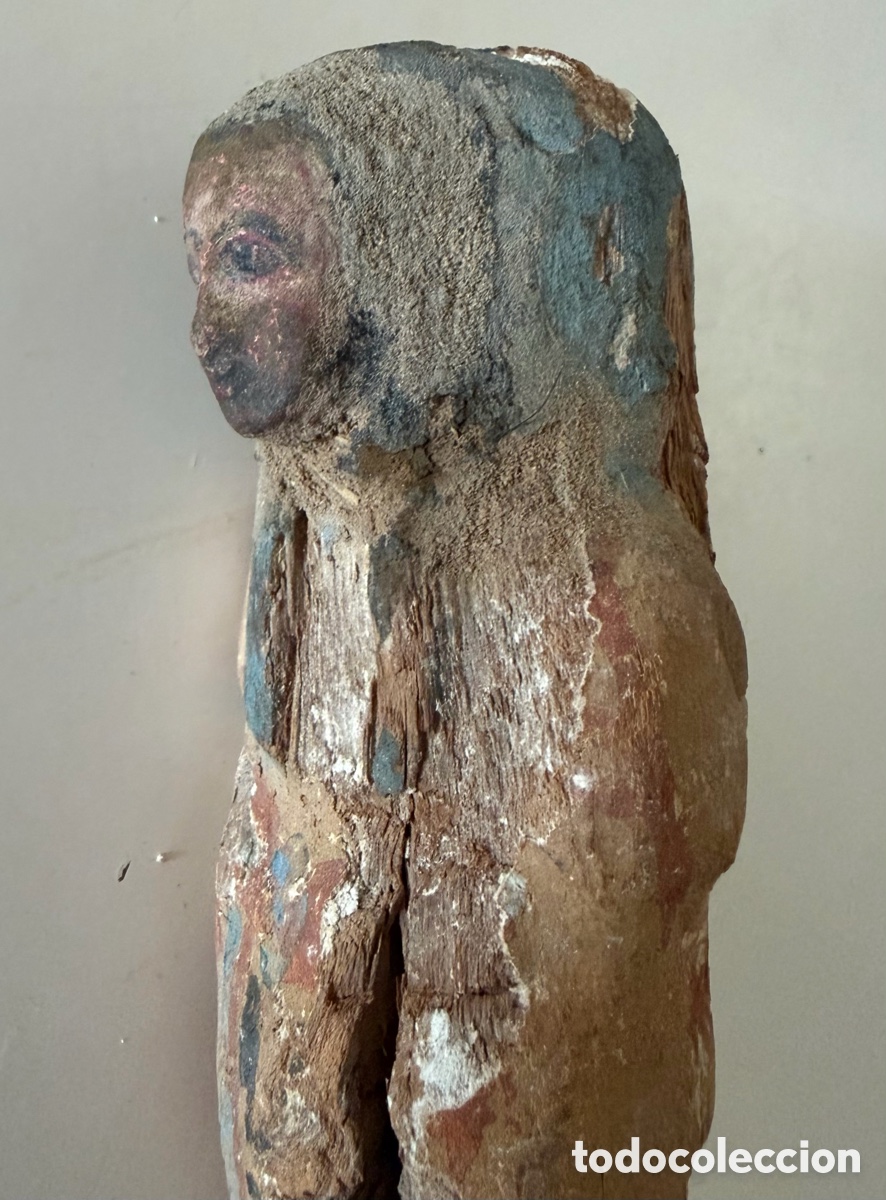
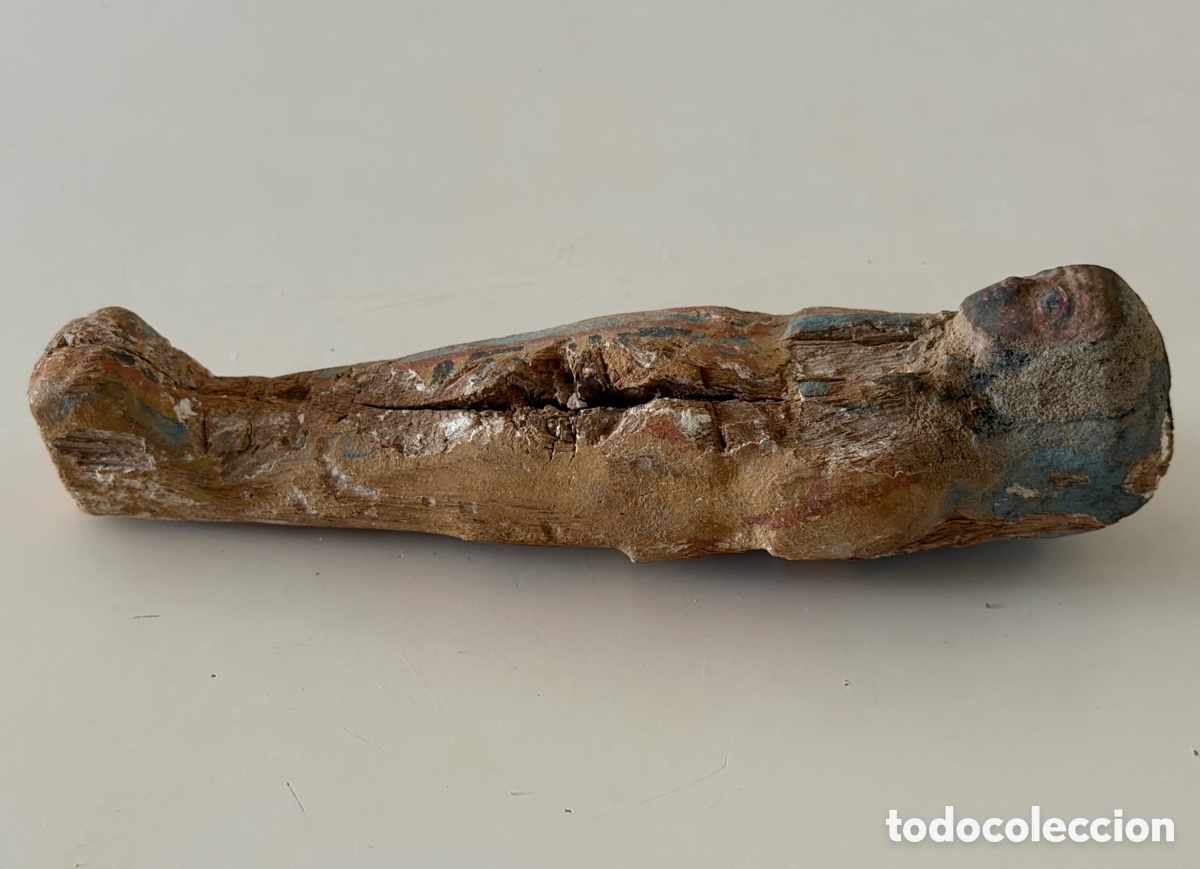
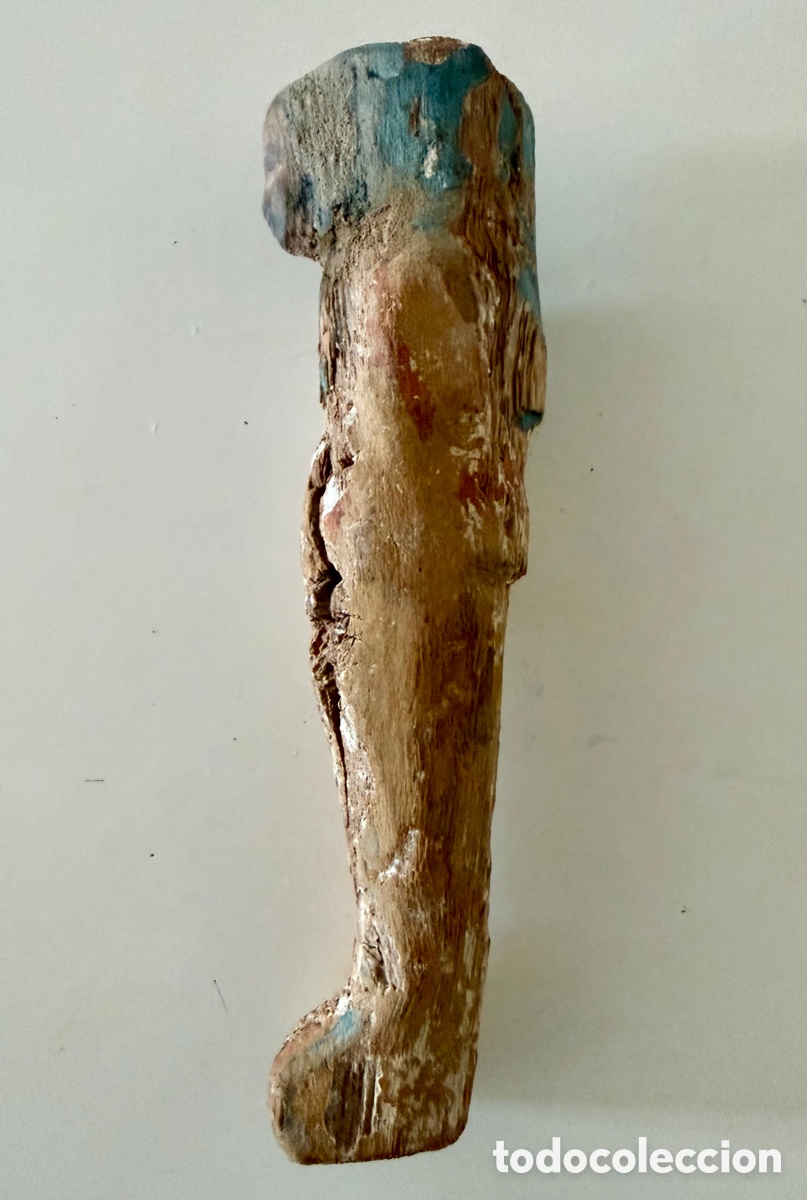
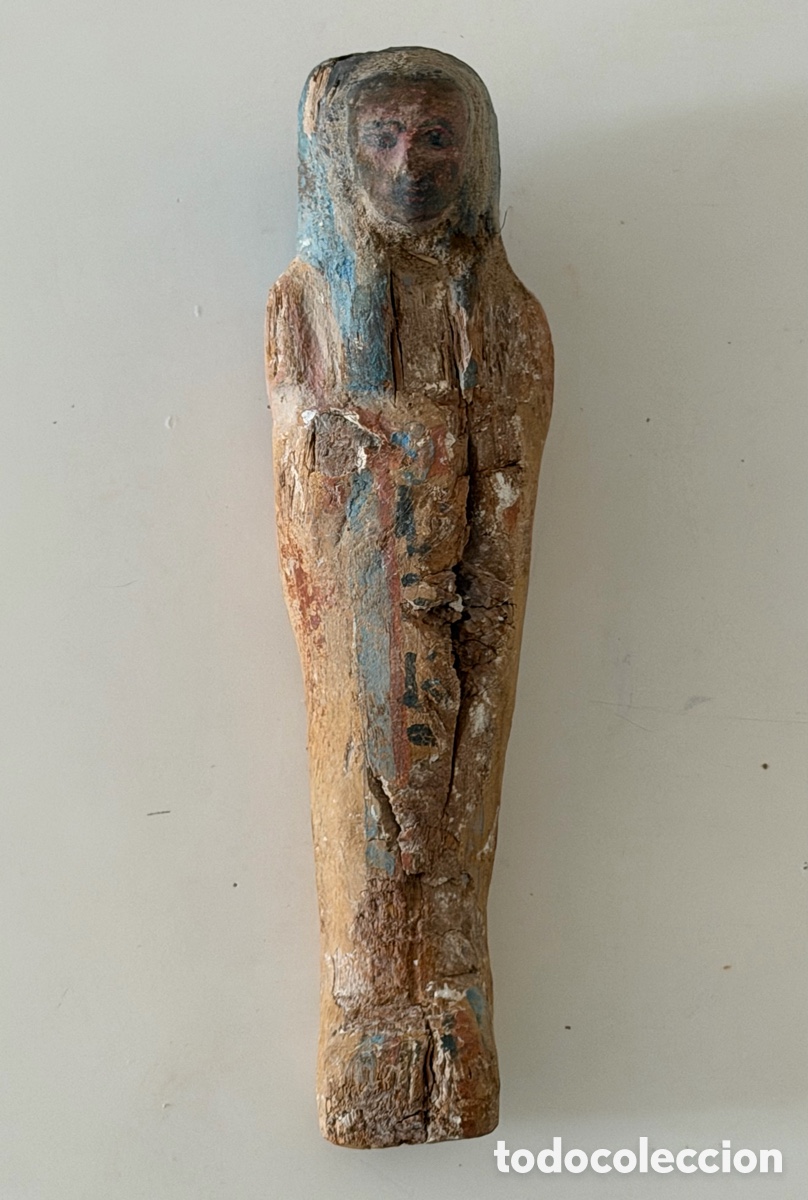
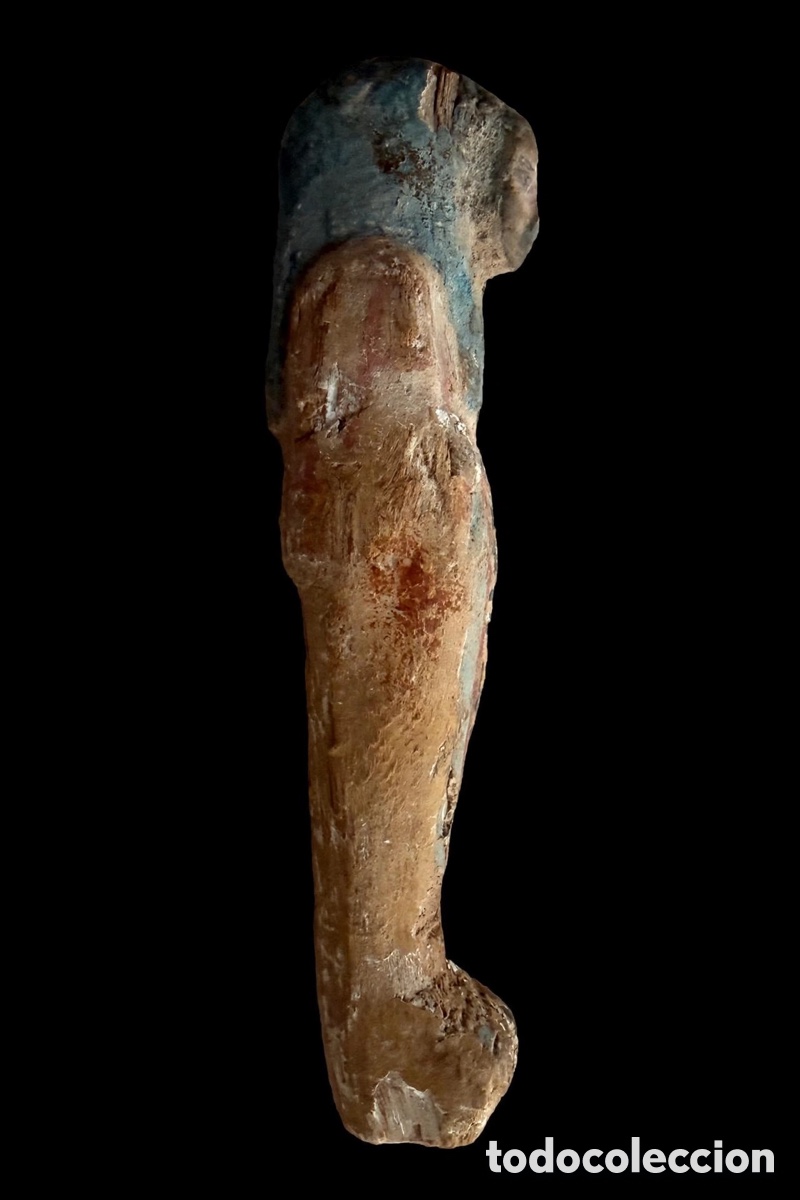
En madera de sicomoro, conservando la mayor parte de su policromía original.
Procedencia: importante colección particular,
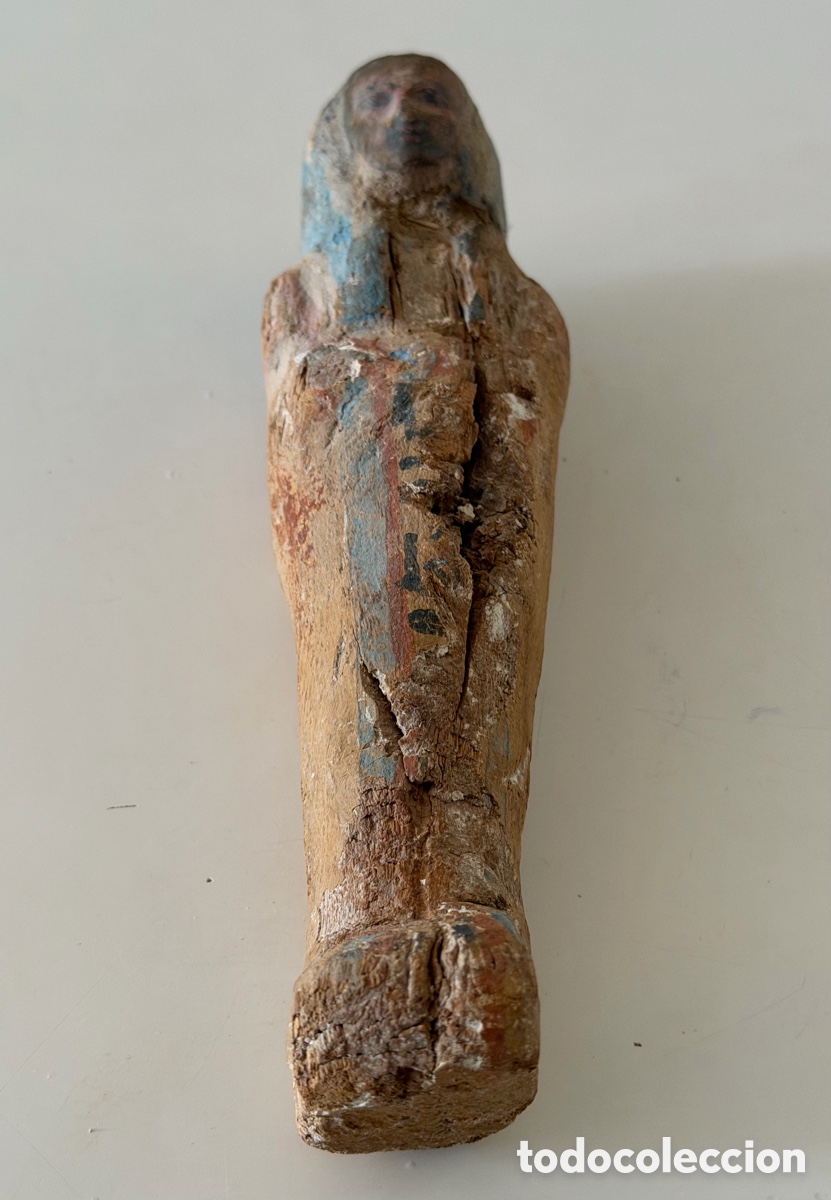
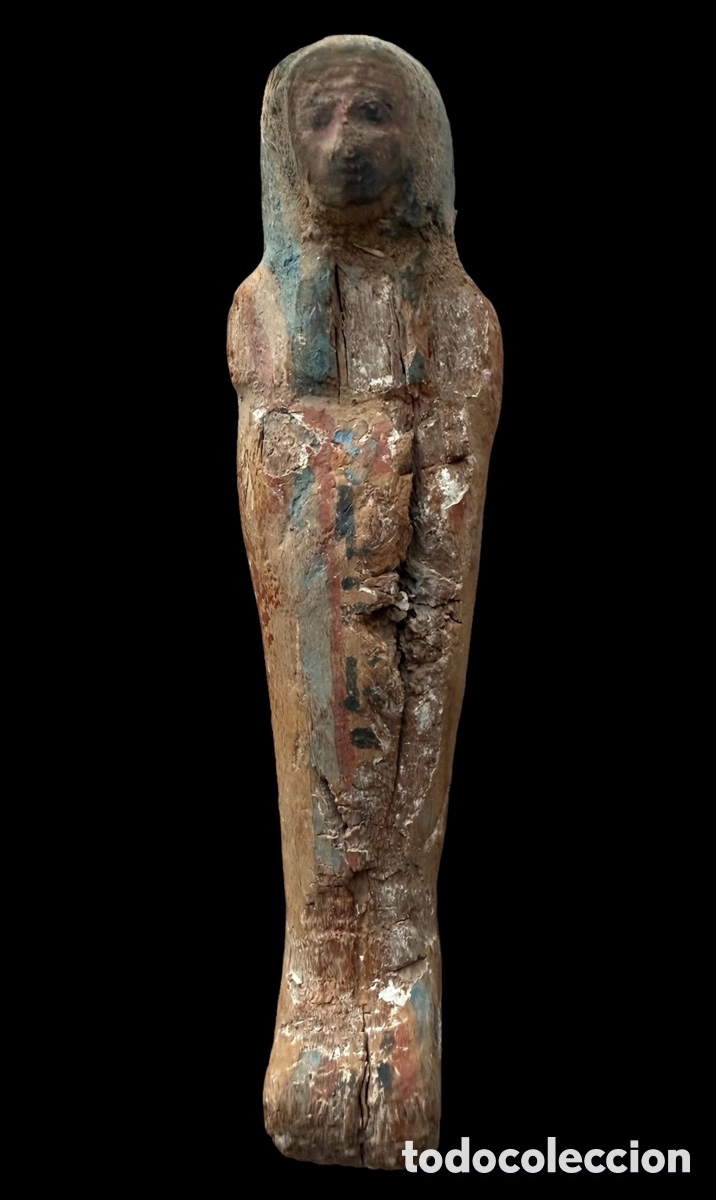
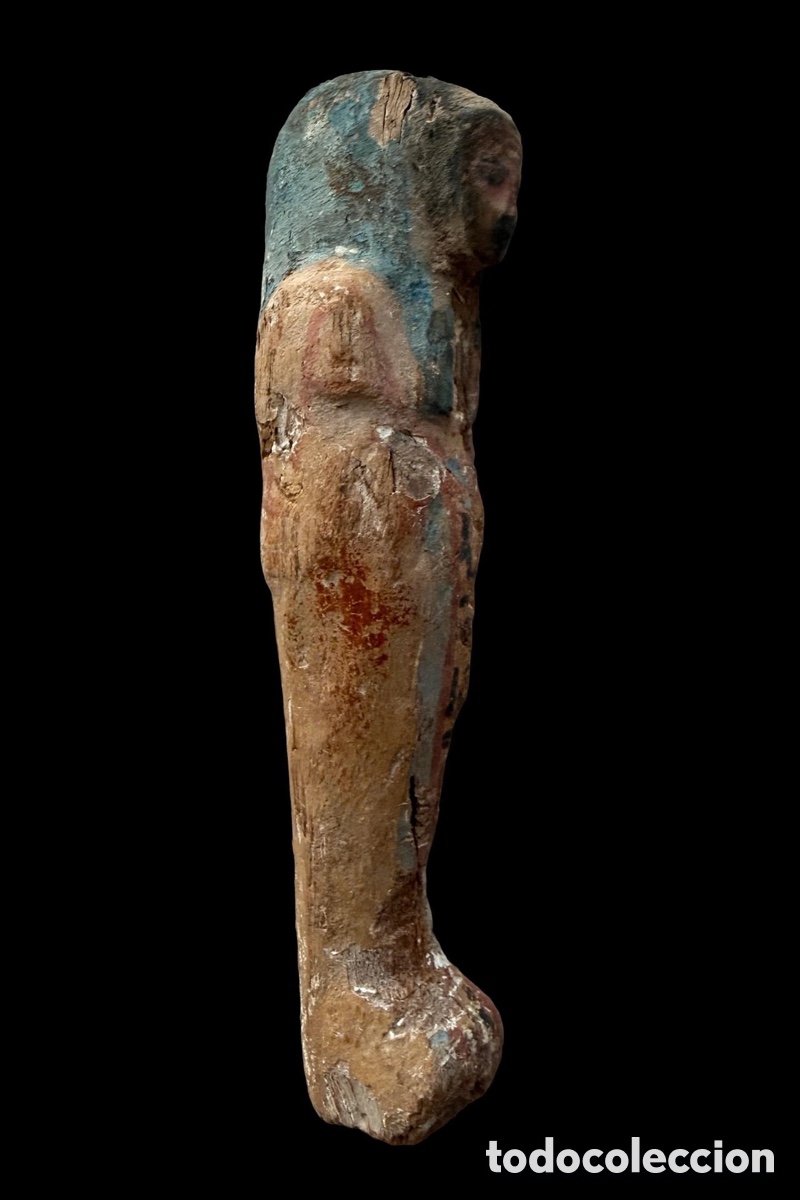
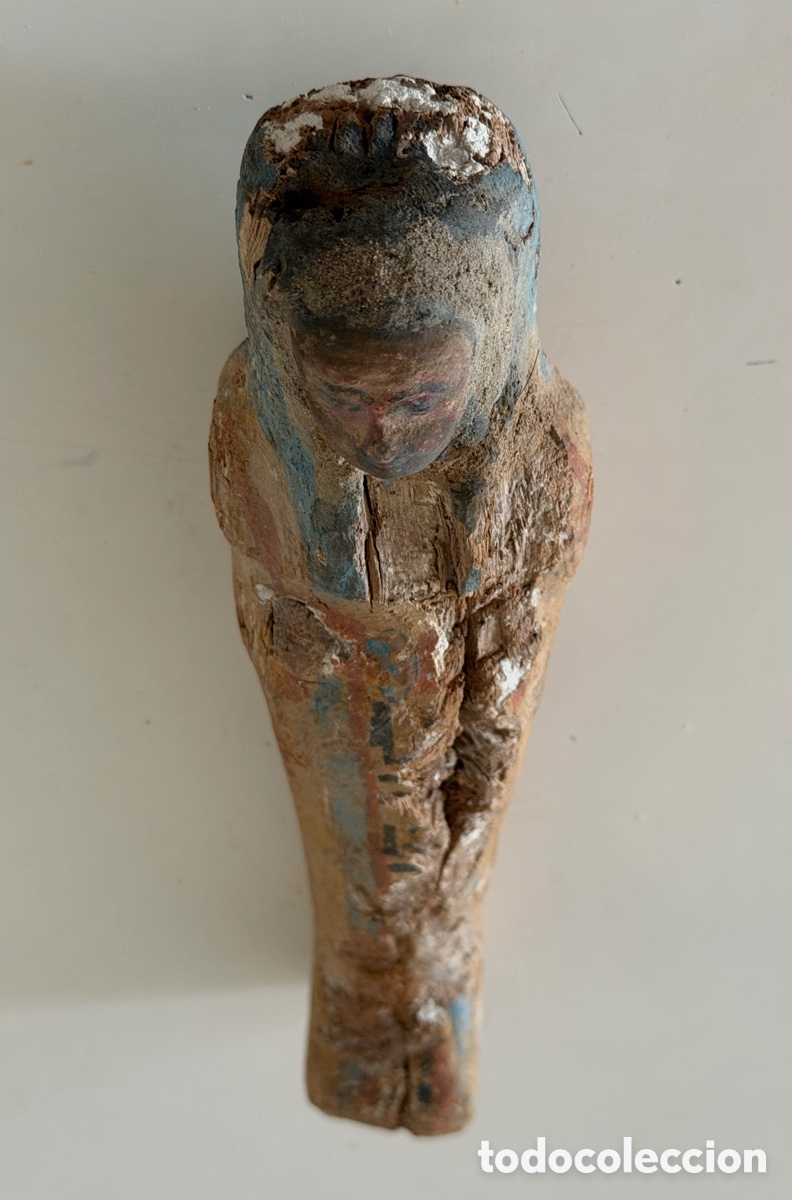
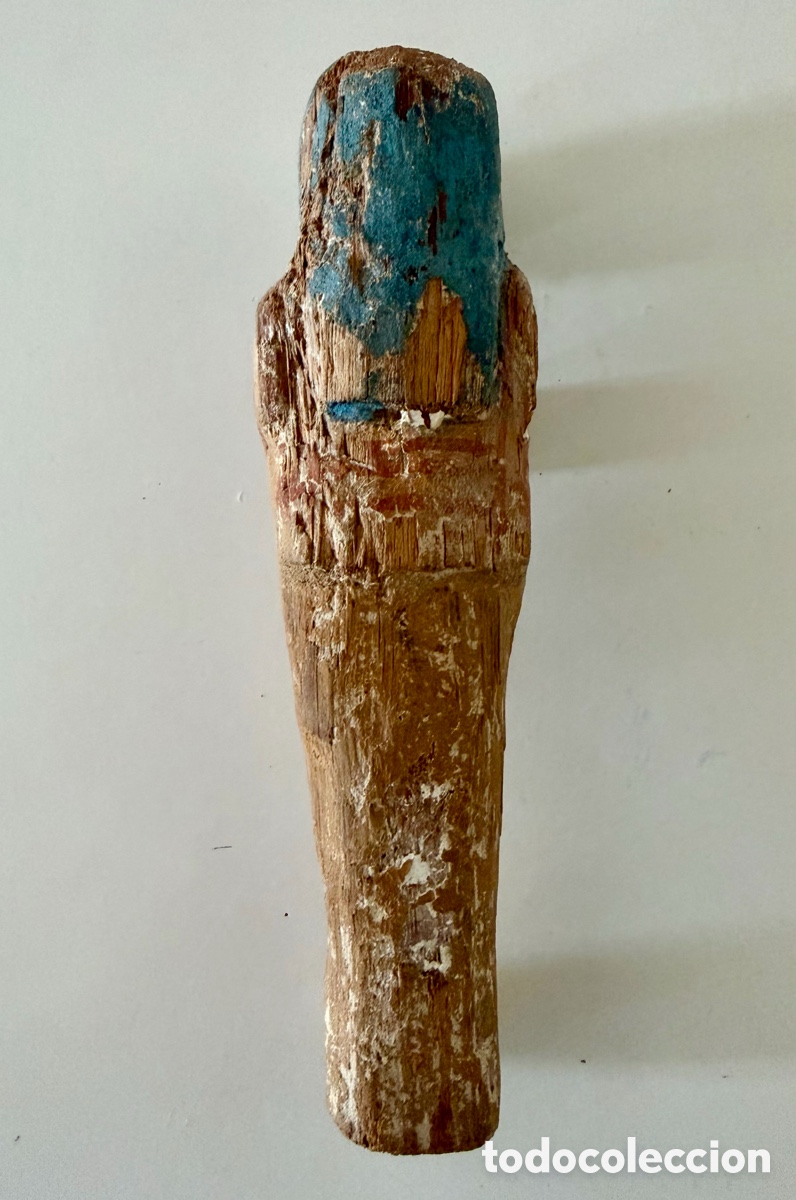
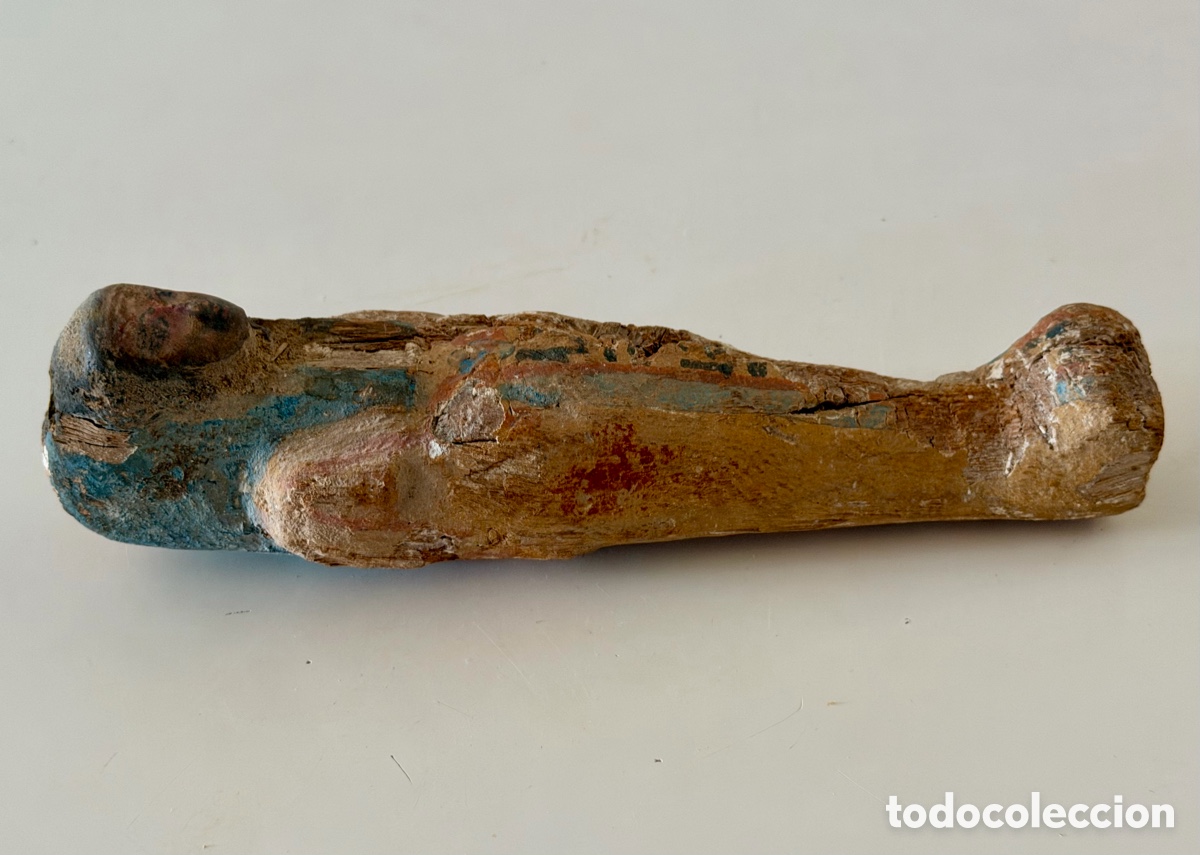
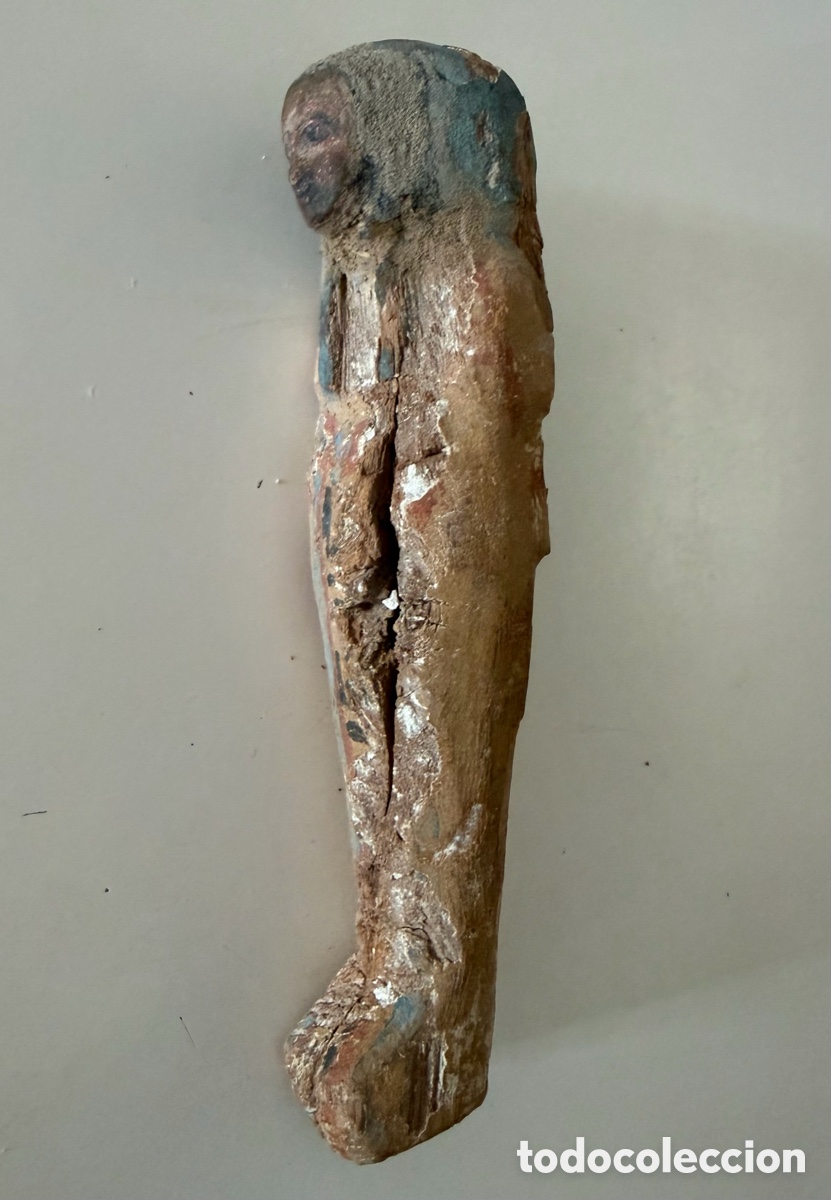
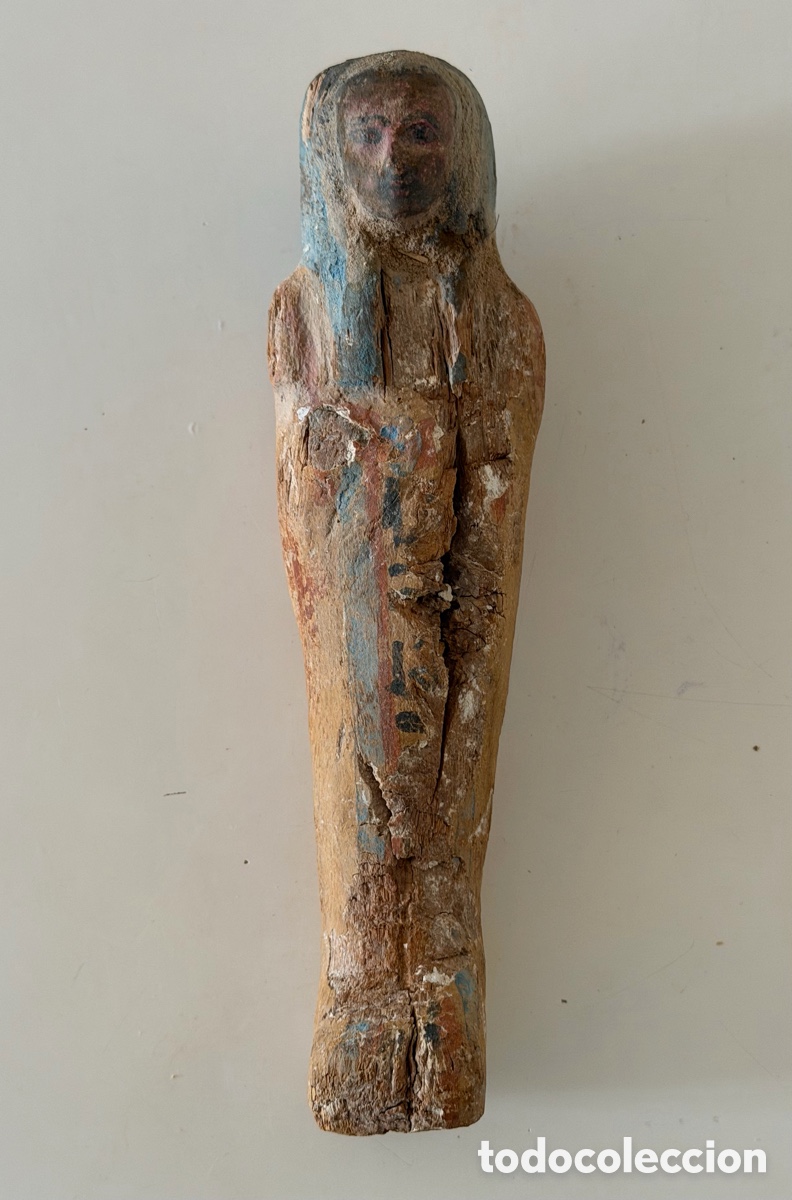
Figura mumiforme de madera ushabti con una sencilla peluca tripartita pintada de negro azulado, excepto los bordes inferiores de las solapas que son amarillos con líneas horizontales rojas. Los brazos están cruzados sobre el pecho. No se aprecian implementos en las manos. El rostro, aunque algo desgastado, tiene una expresión agradable. Parece que se añadieron ojos con cejas en negro. El cuerpo del shabti tiene seis líneas horizontales de una inscripción pintada en negro sobre fondo amarillo, enmarcadas con líneas rojas. El área debajo de la solapa trasera de la peluca está pintada de lineas rojas, con los pies también pintados de blanco. La inscripción ofrece una versión del Capítulo 6 del Libro de los Muertos, pero lamentablemente el nombre del propietario, que debería precederlo, es ilegible debido a que el texto está muy desgastado, especialmente en la parte frontal del shabti.
Medidas 20 cm. de alto
Peso 125 gramos
Colección Privada
Los ushabti eran figuras funerarias de aspecto momiforme que se depositaban en las tumbas del antiguo Egipto. Su propósito era servir al difunto en el más allá, sustituyéndolo para realizar los trabajos que exigía el dios Osiris. Estas figuras, también conocidas como shabtis o ushabtis, eran frecuentemente representadas como figuras humanas en miniatura, generalmente de unos 10 a 30 centímetros de altura. Estaban elaboradas en materiales como la cerámica, la madera, la piedra o el vidrio y a menudo estaban decoradas con inscripciones jeroglíficas que incluían el nombre del difunto y oraciones mágicas para garantizar su propósito.
Polychrome Wooden Ushabti
Made of sycamore wood, retaining most of its original polychromy.
Provenance: important private collection.
A mummiform wooden shabti figure featuring a simple tripartite wig painted blue-black, except for the lower edges of the lappets, which are yellow with red horizontal lines. The arms are crossed over the chest; no implements are visible in the hands. The face, though somewhat worn, bears a pleasant expression. Eyes and eyebrows appear to have been added in black. The body of the shabti bears six horizontal lines of an inscription painted in black on a yellow background, framed by red lines. The area beneath the back of the wig is painted with red lines, and the feet are painted white. The inscription presents a version of Chapter 6 of the Book of the Dead; unfortunately, the owner's name—which should precede the text—is illegible due to heavy wear, particularly on the front of the figure.
Height: 20 cm
Weight: 125 grams
Private Collection
Ushabtis were mummiform funerary figures placed in ancient Egyptian tombs. Their purpose was to serve the deceased in the afterlife by acting as substitutes to perform the tasks required by the god Osiris. These figures—also known as shabtis or ushabtis—were frequently depicted as miniature human figures, typically ranging from 10 to 30 centimeters in height. They were crafted from materials such as ceramic, wood, stone, or glass and were often decorated with hieroglyphic inscriptions that included the deceased's name and magical prayers to ensure the figure fulfilled its intended purpose.

Espagne (Málaga)


 Español
 English
 Deutsch
 Français
 Português
 Italiano